
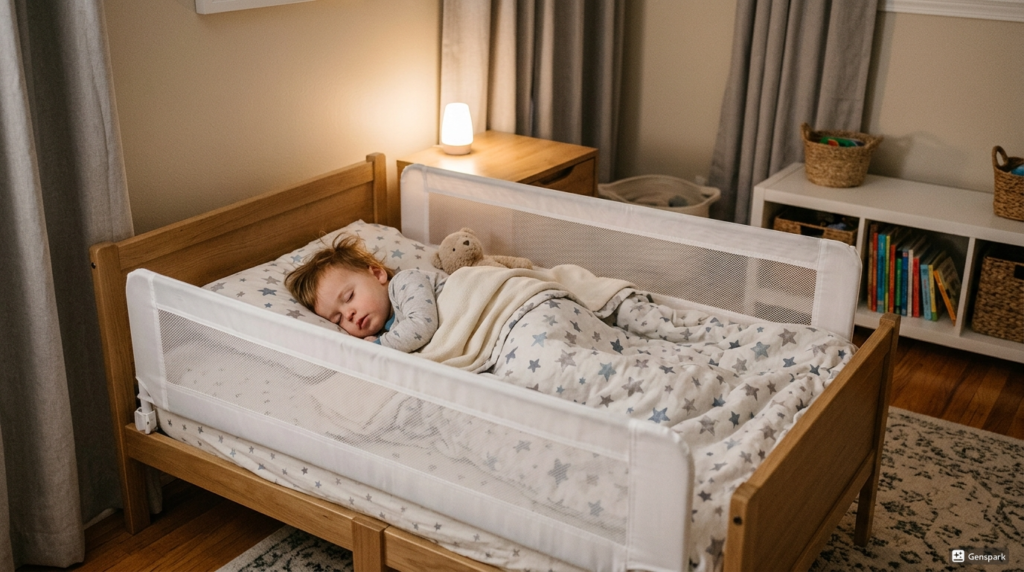
While bed rails are one of the most effective safety tools, they work best when combined with a safe sleep environment. Toddlers are naturally active sleepers, and even small adjustments around the bed can significantly reduce the risk of night time falls.
If your child has recently transitioned from a crib to a toddler bed, creating a safer sleep setup can make a big difference.
Here are a few additional safety steps parents can take.
Position the Bed against a Wall
If your child sleeps on a standard bed, placing one side of the bed against a wall can reduce the number of open edges. This simple adjustment creates a natural barrier and limits the directions your toddler can roll during sleep.
However, make sure there is no gap between the mattress and the wall, as small spaces could pose a safety risk.
Many parents choose a setup where the wall protects one side of the bed while a bed rail protects the other, providing an extra layer of safety.
Use a Low Bed Frame or Floor Bed
Young toddlers often sleep more safely on lower beds. A lower height reduces the chance of injury if a fall happens.
Some parents temporarily switch to a Montessori-style floor bed, where the mattress sits close to the ground. This allows toddlers to move freely while reducing the risk of injury from rolling out.
This setup can be especially helpful during the early crib-to-bed transition stage.
Keep the Bed Area Clear
Take a moment to review the area around your toddler’s bed and remove anything that could make a fall more dangerous.
Avoid placing items like:
- Hard Toys
- Bedside tables with sharp edges
- Heavy lamps or decorations things
- Storage boxes or furniture close to the bed
A clear sleep space helps reduce the chance of injury if your toddler accidentally rolls out during the night.
Establish a Consistent Bedtime Routine
Overtired toddlers tend to toss, turn, and move more during sleep. A consistent bedtime routine helps your child fall asleep calmly and stay in deeper sleep for longer periods.
Helpful bedtime habits include:
- Reading or telling a short bedtime story
- Keeping lights dim/off while prepare them to sleep
- Avoiding stimulating play right before bedtime
- Maintaining a regular sleep schedule
When toddlers feel secure and relaxed, they are less likely to move excessively during the night.
Teach Bed Awareness as Your Toddler Grows
As toddlers develop better coordination, they can learn how to move safely around their bed.
You can gently guide them by teaching simple habits such as:
- Turning around before climbing down from the bed
- Sitting up before getting out of bed
- Avoiding standing too close to the edge of the mattress
These small lessons help toddlers develop spatial awareness and safer night time movement.
What to Do If Your Toddler Falls Out of Bed Despite Safety Measures
Even with the best precautions, occasional falls can still happen. Toddlers grow quickly, and their sleep habits may change during different stages of development.
If your toddler falls out of bed:
Stay Calm and Comfort Your Child
Most toddlers cry briefly after a fall because they are startled or frightened. Pick them up, comfort them, and allow them a moment to settle down.
Observe Their Behaviour
Watch how your child responds. If they remain alert, move normally, and calm down quickly, the fall was likely minor.
Check for Signs of Injury
Look for bumps, swelling, bruising, or pain when moving arms or legs. Also monitor for symptoms such as vomiting, dizziness, or unusual sleepiness.
Reassess the Sleep Setup
If falls happen more than once, it may be time to adjust the sleeping arrangement. Many parents solve the issue by upgrading to stronger safety protection.
Possible solutions include:
- Installing a longer bed rail
- Using a taller safety rail
- Adding a double-side rail system
These adjustments often prevent future falls.
When to Seek Medical Advice
Most toddler bed falls from a low height are minor. However, it is always important to stay cautious.
Consult a doctor or paediatrician immediately if your toddler:
- Hits their head hard
- Shows unusual drowsiness or confusion
- Vomits after the fall
- Has difficulty walking or balancing
- Continues crying for an extended period
Even when symptoms appear mild, speaking with a doctor can provide reassurance and ensure your child is completely safe.
Parent Tip from Our Experience
When our twins started transitioning from their crib, we realized that bed rails alone were not enough. Combining a sturdy rail with a low mattress height and a clear sleep space made the biggest difference.
Once we adjusted the sleep environment, night time falls completely stopped and bedtime became much less stressful for everyone.