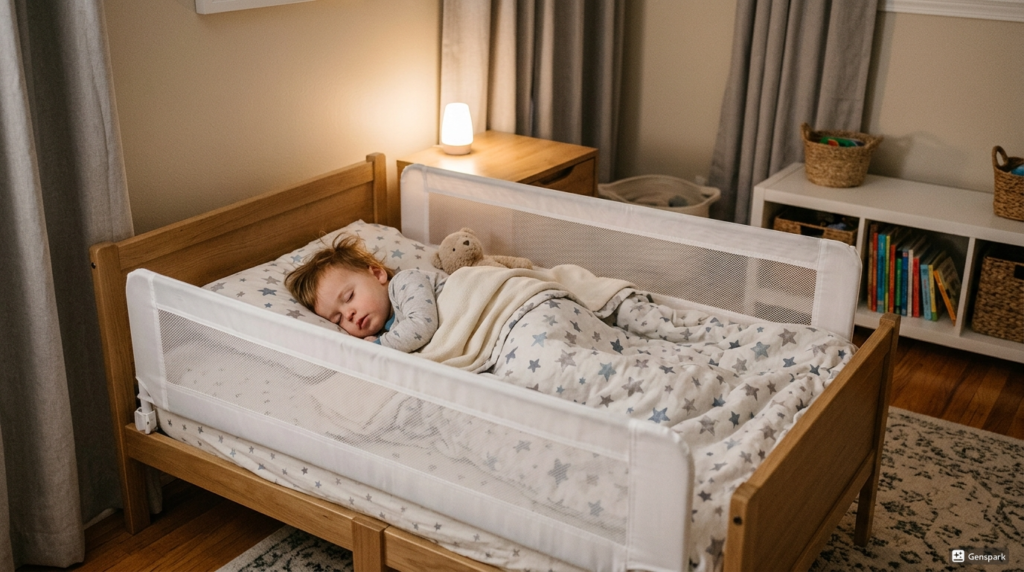
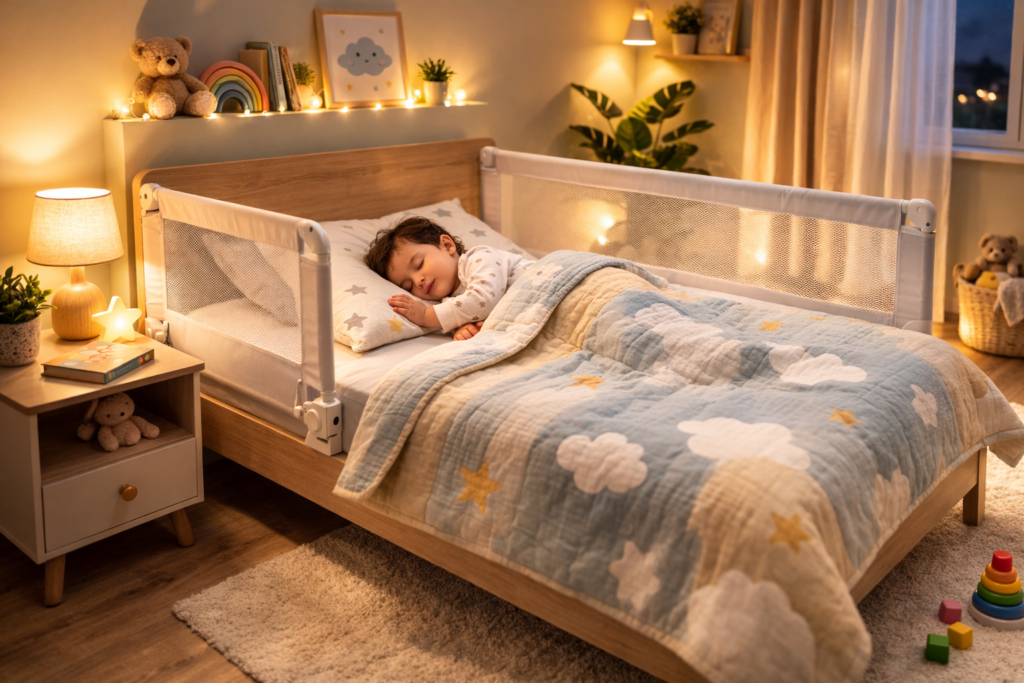
Introduction: Peace of Mind for Parents
I still remember those restless nights when my little one started rolling over during sleep. I would wake up several times just to make sure she wasn’t too close to the edge of the bed. Even though she was sleeping peacefully, I wasn’t.
That’s when I realized something important transitioning from a crib to a regular bed is a big milestone, but it also brings new worries.
A baby bed rail may look like a small addition, but for many parents, it’s the difference between anxious nights and peaceful sleep, it creates a safe boundary that protects your child while giving you the comfort of uninterrupted sleep.
If you’re a parent looking for a safer and smoother transition to a big-kid bed, this guide will help you understand everything you need to know about choosing the right bed rail.
Quick Summary for Busy Parents
- Best age to use: 18 months to 5 years
- Best type: Fold-down mesh rails
- Avoid: Rails for infants under 12 months
- Most important feature: Secure anchoring system
When Does a Baby Need a Bed Rail?
Most parents start considering a bed rail when:
- Their toddler begins climbing out of the crib
- They transition from a crib to a toddler or regular bed
- Co-sleeping becomes more frequent
- Their child moves a lot during sleep
Typically, bed rails are useful between 18 months to 5 years, depending on your child’s sleep habits and the type of bed.
However, bed rails are not recommended for infants under 12 months.
Why Bed Rails Are Important for Toddler Safety
Babies and toddlers are active sleepers. Even a small roll can lead to a fall.
Here’s why a bed rail becomes important:
Prevents Falls and Injuries
It creates a protective barrier that reduces the risk of accidental night time falls.
Supports Safe Independence
Your child gets the freedom of sleeping in a regular bed while still being protected.
Helps Parents Sleep Better
You no longer need to wake up repeatedly to check whether your child is near the edge.
Adds Stability
Modern bed rails are designed with strong anchoring systems to prevent gaps and movement.
Our Personal Experience
Initially, we thought a bed rail wasn’t necessary. We tried placing pillows on both sides of the bed whenever we were busy with household work. But as our twins grew more active, we noticed they could easily push or roll past the pillows.
That’s when we realized that a proper, sturdy bed rail was not just helpful — it was necessary for their safety. The peace of mind we felt after installing one was truly worth it.
Common Mistakes Parents Make When Using Bed Rails
- Using pillows instead of proper rails
- Not tightening anchoring straps properly
- Leaving gaps between the mattress and rail
- Using bed rails for infants under 12 months
- Choosing the wrong height for an active sleeper
Safety depends on both the product and correct installation.
How to Choose the Best Bed Rail for Your Baby
Choosing the right bed rail should always start with safety, followed by comfort and convenience.
Here’s what truly matters:
Size & Bed Compatibility
Make sure the rail matches your mattress size (single, twin, queen) and bed frame type. Some rails are not suitable for platform beds.
Mattress Thickness
Bed rails are designed to fit within a specific mattress thickness range. Choosing the wrong size can weaken support and create gaps between the mattress and the rail.
Material & Breathability
Breathable mesh sides are highly recommended because they:
- Allow proper airflow
- Let you see your baby clearly
- Reduce suffocation risks
Avoid sharp metal edges or poorly padded frames.
Height & Length of the Rail
Active sleepers may need:
- Taller rails
- Longer coverage along the bed edge
Short rails may not provide full protection.
Secure Installation System
Look for:
- Strong anchoring straps
- Non-slip base
- Clear assembly instructions
A poorly installed rail can be more dangerous than no rail at all.
Fold-Down Feature
A fold-down option makes it easier to sit beside your child, change sheets, or comfort them at night.
Ease of Cleaning
Removable, washable fabric panels are practical because toddlers can be messy.
Portability
If you travel often or visit grandparents, consider a lightweight or foldable model.
Safety Standards & Certification
Always check if the product meets recognized child safety guidelines and has passed stability tests.
Types of Baby Bed Rails
Understanding the different types will help you choose the right one for your home.
Fixed Bed Rails
- Strong and stable
- Ideal for long-term use
- Best for very active sleepers
Fold-Down Bed Rails
- Can be lowered when needed
- Easier for parents during bedtime routines
- Practical for daily use
Portable Bed Rails
- Lightweight
- Easy to carry
- Suitable for travel or visiting relatives
Foam Bed Bumpers
- Metal-free
- Placed under fitted sheets
- Provide gentle boundary support
- Better for toddlers, not infants
Adjustable Bed Rails
These allow height adjustments based on mattress thickness and child growth.
Each type serves a different purpose. Your choice should depend on your child’s sleep habits and your daily routine.
Personally, I prefer fold-down rails because they provide safety without sacrificing convenience.
Bed Rail Comparison Table (Overview for Parents)
Quick Comparison: Here’s a snapshot of popular toddler bed rails that parents frequently choose for safety and peace of mind. This overview helps you understand what type of option might suit your child before you jump into detailed reviews in our dedicated product guide.
For full reviews and affiliate links, see our detailed product page: Best Bed Rails for Toddlers (2026 Picks).
| Brand & Product | Best For | Key Feature | Child Sleep Stage | Why Parents Like It |
| R for Rabbit Bed Rail | Growing toddlers | Adjustable mesh + secure frame | 1–5 yrs | Trusted Indian brand, sturdy & reliable |
| Babyhug Bed Rail Guard | Budget friendly | Lightweight + easy install | 1–4 yrs | Affordable and simple, good for basic protection |
| Regalo Swing-Down Bedrail Guard | Everyday safety | Steel frame + swing-down | 1–5 yrs | Easy access + strong anchoring |
| Summer Infant Double-Sided Bedrail | Extra coverage | Dual rails for more protection | 1–5 yrs | Breathable mesh + trusted design |
| Hiccapop Convertible Bed Rail | Taller toddlers | Reinforced straps + washable fabric | 1–5 yrs | Excellent durability and height |
| Munchkin Safety Bed Rail | Travel & small beds | Compact & quick assembly | 1–4 yrs | Great for portable use / guest rooms |
| Dream On Me Mesh Bed Rail | Simple & lightweight | Foldable + breathable mesh | 1–5 yrs | Good for travel & everyday use |
Are Bed Rails Safe for Babies?
Yes — when used correctly and at the right age.
However:
- Bed rails are recommended for toddlers, not infants.
- Ensure there are no gaps between the mattress and the rail.
- Always follow manufacturer installation instructions.
- Regularly check the stability of the rail.
Safe installation is just as important as choosing the right design.
What to Do If Your Toddler Still Falls Out of Bed
Even with a bed rail installed, some toddlers may still roll or climb out. If that happens, here are the key steps every parent should know:
check for Injuries Immediately
Stay calm and assess your toddler for swelling, vomiting, unusual sleepiness, or behaviour changes. Most low-bed falls are minor, but monitoring is essential.
Lower the Bed Height
If the bed frame is high, consider using a low toddler bed or placing the mattress on the floor temporarily to reduce injury risk.
Inspect the Bed Rail Installation
Loose anchoring straps, gaps between mattress and rail, or incorrect sizing are common causes of repeated falls.
Upgrade to a Taller or Full-Length Rail
Active sleepers may need extra-tall or longer bed rails for complete edge protection.
Add a Soft Landing Surface
Place a thick rug or foam mat beside the bed to provide added cushioning during the transition phase.
Reassess Sleep Readiness
Frequent falling may indicate your toddler isn’t fully ready for the crib-to-bed transition yet.
For a complete step-by-step safety guide, read our detailed tutorial: What to Do If Your Toddler Falls Out of Bed.
Final Thoughts
A bed rail may seem like a small addition, but it makes a meaningful difference in your child’s safety — and your peace of mind.
Choose a bed rail that fits securely, matches your mattress, and suits your child’s sleeping habits. When your little one sleeps safely, you can finally rest peacefully too — and that’s something every parent deserves.
This article is for informational purposes only and does not replace professional pediatric advice. Always consult your child’s doctor for specific safety concerns.
Our Experience & Transparency
At GigglyHug, we test products based on real parenting experience and thorough safety research. Every recommendation is chosen with safety as the top priority.
Frequently Asked Questions
What age should a baby use a bed rail?
Usually from 18 months onward, during the transition from crib to toddler bed.
Do bed rails prevent all falls?
They significantly reduce the risk but should be combined with proper supervision.
Do bed rails fit all beds?
No. Always check mattress thickness and bed frame compatibility before purchasing.
Are foam bed bumpers safe?
They can be safe for toddlers but are not suitable for infants.